Shame
All My Puny SorrowsShame in All My Puny Sorrows is both inherited and intimate: it travels through a Mennonite family’s silences, appears in the community’s policing of women and difference, and becomes a demanding voice in Yolandi Von Riesen’s self-understanding. The novel does not treat it as a single feeling with a simple remedy. Shame can enforce submission and magnify distress, yet Yolandi also understands it as a motive for apology, empathy, and artistic work. Her longing to live without it remains entangled with the relationships and responsibilities she cannot simply leave behind.
Inherited silence and communal judgment
The family’s history gives shame a collective and linguistic dimension. Plautdietsch is described as a language of shame, within a community that has learned to keep pain quiet and carry it. The family’s ancestors came from a Mennonite village in Siberia; the account of the grandfather’s survival of violence and displacement reaches into the present through what the generations were told not to speak about. His warning that the children should not be taught Plautdietsch if they were to survive makes language itself part of an inherited strategy of protection, even as that strategy preserves silence around the past. Lottie’s later education as a therapist gives her a framework for recognizing how suffering can pass from one generation to another.
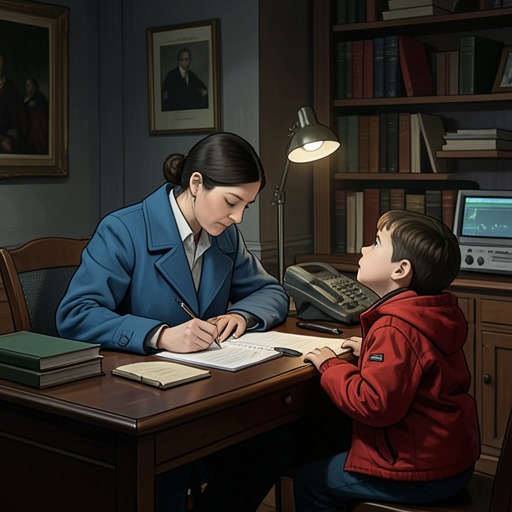
That inheritance is not presented as an excuse for the community’s treatment of its members. When Elfrieda Von Riesen’s wish to study music at university draws the elders to the family home, their suspicion of higher education for girls turns a child’s ambition into a public test of conformity. In the living room, a man warns Jake Von Riesen that Elfrieda will acquire ideas; meanwhile, Yolandi and Lottie hear the discussion from the kitchen. The divide between the men’s deliberations and the women’s domestic space makes judgment part of ordinary household life. Elfrieda’s piano playing interrupts the elders’ meeting, asserting a form of expression that the community’s rules had sought to contain.
Care, conflict, and responsibility
Shame also gathers around the family’s effort to care for Elfrieda while confronting her wish to die. During an earlier crisis, Yolandi calls for medical help although Elfrieda begs her not to. The decision makes their conflict explicit: Elfrieda wants death, while Yolandi wants her to live. They remain sisters who love one another, but their opposing responses to the crisis make care feel like a breach as well as a bond. The episode does not make either sister’s position emotionally uncomplicated; it shows the cost of acting when love cannot remove disagreement.
Later, Elfrieda asks Yolandi to take her to Switzerland, privately and without telling Lottie or Nic, because she believes they would prevent her from going. Yolandi refuses. Her refusal is not evidence that she has ceased to hear her sister’s distress: she is torn between acknowledging Elfrieda’s suffering and continuing to search for another way forward. Before leaving Winnipeg with Lottie for Tina’s funeral in Vancouver, Yolandi tells Elfrieda that she understands her wish for dignity and rest, and that she will return and try to help. She also says that the two sisters do not agree about what saving Elfrieda means. The exchange presents responsibility as an unresolved relation between them, not a clean choice that frees Yolandi from doubt.
Self-judgment in adult life
In her writing to Elfrieda, Yolandi brings shame into the less dramatic but persistent judgments of adult life. She describes an unsatisfying relationship and assesses herself harshly as a lover and as a possible example for Nora. She worries about what kind of mother she is, while also wishing to fall in love again and lamenting the conflict that remains between herself and Dan. The letter’s directness turns private embarrassment into an attempt at communication with her sister; the impulse to disclose does not prevent her from condemning herself as she does so.
A later encounter with Jason brings several of those self-judgments together. Yolandi sees herself as a woman approaching divorce, a daughter who nags Lottie, a sister who cannot find the words that will save a life, and a writer whose claims about her subject are unreliable. The list expands a painful moment into an inventory of selves, each measured against a standard she believes she has failed. Her distress is not confined to one role: it gathers force from the collision between family duty, romantic life, and authorship.
Shame, apology, and art
Yolandi gives shame an explicit moral theory. She argues that it can restrain harmful conduct, prompt people to apologize, and help them empathize with others; she also connects self-reproach to the effort to write books as a form of atonement. At the same time, she sees how shame can damage relationships and become material for books, films, and theatre. The thought is deliberately unstable: art may arise from the very suffering that a person wants to overcome, while the possibility of artistic meaning does not make the suffering harmless.
The contradiction sharpens when Yolandi climbs the stairs after seeing Jason. She repeats an instruction to stop and checks herself for traces of the encounter, then thinks of a friend’s claim that shame might one day be discussed and banished. She has previously argued that shame cannot simply be talked away, but in that moment she longs for a life without it. Her certainty that shame has social and artistic functions coexists with a desire to be free of its personal pressure. Later, newly divorced and exhilarated by signing the papers, she races between her lawyer’s office and Jason’s garage, where practical mishaps and family obligations intrude on the feeling of release. The scene places freedom beside, rather than beyond, the tangled demands of her life.
Memory, accountability, and limits
The novel also distinguishes inherited pain from inherited authority. On the way back to the hospital, Yolandi recognizes that Mennonite persecution and family trauma have shaped her past, but insists that suffering does not justify frightening or belittling other people. The realization makes shame more than a private judgment: it asks how people who have themselves been wounded can reproduce harm through accusation and condemnation. Her anger does not erase the family’s history; it refuses to let that history settle the question of accountability.
A quieter counterpoint appears when Tina whispers the family’s bedtime blessing to Yolandi. The words recall the sisters’ childhood and Leni, whose death remains part of the family’s accumulation of losses. Here Plautdietsch carries intimacy as well as the history of shame: a language associated with silence can also hold tenderness and remembrance. By placing communal judgment, inherited grief, family care, and self-criticism beside these private acts of connection, the novel leaves shame unresolved. It may prompt accountability, but it cannot itself repair the harms or decide how one sister should answer another’s suffering.